


Arang Kel
Called 'Heaven on Earth' — a hillside village with panoramic valley views.
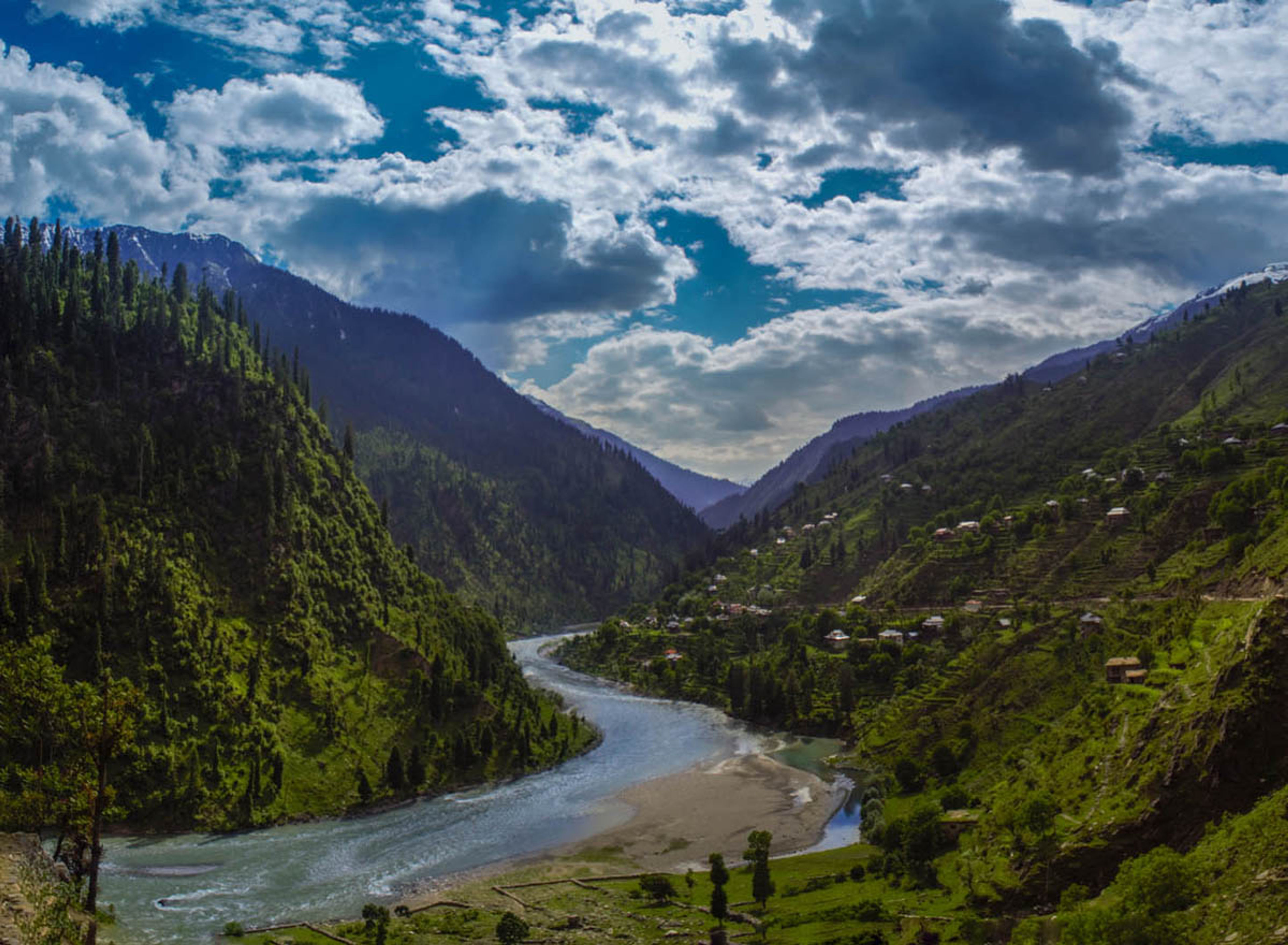
The Jewel of Azad Kashmir
Stretching 200 kilometres along the Line of Control, the Neelam Valley is a corridor of impossible beauty, a deep, forested gorge carved by the turquoise Neelam River as it rushes down from the high Himalayas into Azad Kashmir. Dense conifer forests cling to near-vertical slopes, while waterfalls tumble from cliffs above traditional stone-and-timber villages. The valley is home to Sharda, an ancient centre of Sanskrit learning, and dozens of alpine meadows and lakes that remain largely untouched by mass tourism. Keran, Kel, and Taobut mark the upper reaches, each more remote and pristine than the last. Wildlife including snow leopards, Himalayan black bears, and musk deer roam the upper ridges. The valley receives heavy snowfall in winter, transforming it into a white wilderness accessible only to the hardiest travellers.
5 flexible packages — your dates, your tier
The small, specific reasons travellers keep coming back.
Called 'Heaven on Earth' — a hillside village with panoramic valley views.
A stunning alpine lake at 3,680m, one of the highest in AJK.
Ancient Buddhist university ruins dating back to the 4th century.
The crystal-clear river that gives the valley its name.
Some of the greenest landscapes in all of Pakistan.
A charming village surrounded by pine forests and snow-capped peaks.
Getting there, what to do, where to stay, and what to eat — the local ground truth.
From Islamabad, drive south-east on the M-1 and then east to Muzaffarabad, the capital of Azad Kashmir. Total drive is 4 to 5 hours. From Muzaffarabad, the Neelam Valley Road follows the Neelam River north-east along the Line of Control, and it is a long single day to reach the upper valley. Keran (155 km, 5 to 6 hours from Muzaffarabad) is the mid-valley base, Sharda (35 km further, 2 more hours) is the second cluster, and Kel (another 3 hours) is the last town before the road narrows to Taobut.
The road above Sharda closes with heavy snowfall from December to April, and only Muzaffarabad, Keran and Sharda stay accessible in winter. The upper valley (Kel, Arang Kel, Taobut) reopens in May or June depending on the winter. Ratti Galli and Chitha Katha Lake treks are July-to-September only.
Keran sits directly on the Neelam River, with the Indian-administered village of Keran visible across the water on the other bank. It is the most photographed spot in the valley for exactly this reason. Wooden and stone-clad guesthouses stack up the hillside above the river, and evening walks along the bank end at the LoC fence. Keran is the mid-valley overnight base and a good day-one stop.
Arang Kel is a wide alpine meadow at 2,700 m perched above the town of Kel, reached by a chairlift and a 30-minute hike, or a longer 90-minute walk-up. Open meadow with clusters of traditional wooden Kashmiri houses, panoramic views over the Neelam gorge, and cold night skies. Best from June to early October, snowbound from November.
Sharda was one of the great Sanskrit learning centres of ancient South Asia, home to the Sharda Peeth university whose ruined stone walls still stand on a bluff above the river. It gives its name to the Sharda script, once the writing system of Kashmir. Today Sharda is a quiet valley town at the confluence of the Neelam and its side stream, a good overnight between Keran and Kel.
Taobut is the last village on the Pakistani side of the Neelam Valley, past Kel and just short of the point where the valley kinks into Indian-administered territory. It is a small settlement of stone houses, high-altitude farms and one or two guesthouses. Reaching Taobut requires an early start from Kel and a rough jeep track for the final stretch. Worth it for travellers who want the most remote spot the valley offers.
Ratti Galli is a high-altitude glacial lake at 3,700 m, the most famous trek in the valley. From the base camp at Dowarian, a 2 to 3 hour jeep ride takes you to the trailhead, then a moderate 90-minute hike leads to the lake basin. Turquoise water ringed by scree slopes and wildflower meadows in July and August. Doable as a long day trip from Keran, or an overnight camp at base.
Chitha Katha is a milk-white glacial lake at 3,720 m near Shounter Valley, reached by a strenuous 5 to 6 hour trek from the road head at Domail. Less visited than Ratti Galli and considered a more serious hike. Best from mid-July to early September, and worth a full day plus an overnight if you camp at the lakeside.
Green Village Resort Upper Neelam is the strong deluxe option in Keran, cabin-style rooms with river-and-LoC views, wood stoves and a shared dining lodge. Most Neelam itineraries base one to two nights here.
Wanderlust Chapter 1 and Chapter 2 are the two established resorts at Arang Kel, deluxe and luxury tiers respectively, both meadow-facing with in-house dining and reliable heating for the shoulder season. In Taobut, Corner View Guest House is the reliable deluxe option, basic but clean, with hot water and generator power. No luxury tier exists above Kel.
Neelam Valley sits on the Line of Control, and above Kel there are military checkpoints where you must present a CNIC or passport. Foreign nationals need a No Objection Certificate arranged in advance through your operator, plan for a week's notice. Phone signal is Special Communications Organisation (SCO) only in the upper valley, so most Pakistani mobile networks do not work above Muzaffarabad, buy an SCO SIM in Muzaffarabad if you need connectivity. There are no ATMs above Muzaffarabad, carry enough cash for the whole trip. Nights are cold even in July at Arang Kel altitude, pack thermal layers.
The valley is Kashmiri and Hindko-speaking, with strong cultural ties to the Kashmir Valley on the Indian-administered side of the LoC. Traditional Kashmiri wooden architecture with pitched roofs and carved balconies is still the dominant house style. Food is influenced by Kashmiri wazwan, with slow-cooked meat dishes, kashmiri chai (a pink salt tea), and river trout from the Neelam. Culturally the valley carries the layered heritage of an ancient Sanskrit learning centre at Sharda and a border-region community shaped by decades of division, both stories worth asking about at any homestay.
April – May
Best timeNeelum River full with snowmelt — apricot and cherry bloom across Athmuqam and Kutton.
June – September
Best timePeak season — Kutton, Kel, Sharda and Taobut all open; Ratti Gali and Chitta Katha treks in full flow.
October – November
Best timePoplars and chinar turn gold across the gorge — sharpest LoC-side views before winter.
December – March
ShoulderMuzaffarabad–Kel road stays open with care — upper Taobut and Kel side-tracks snowbound and closed.