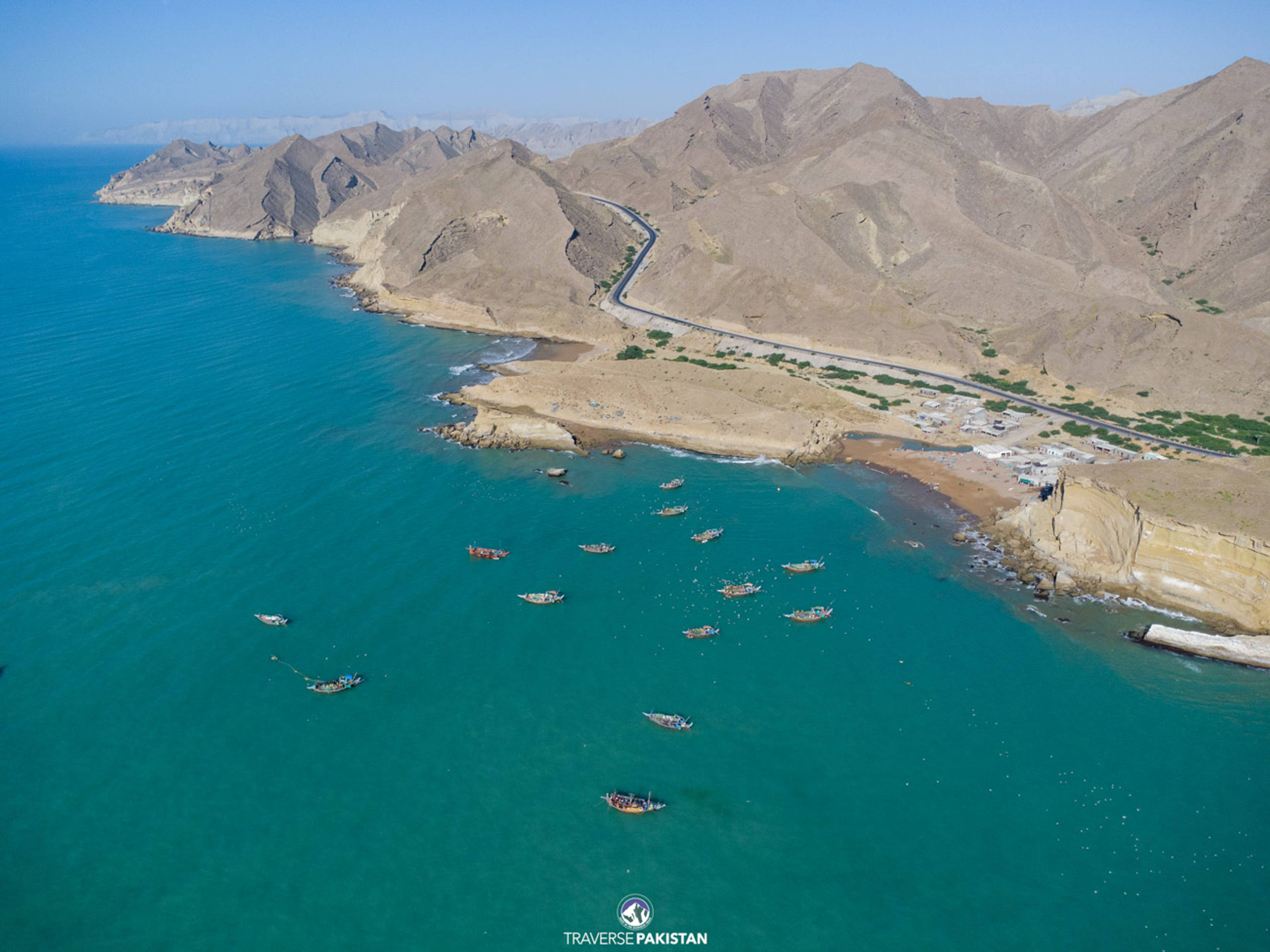

Kund Malir Beach
A pristine golden beach with dramatic cliff backdrops.
Ancient Gedrosia
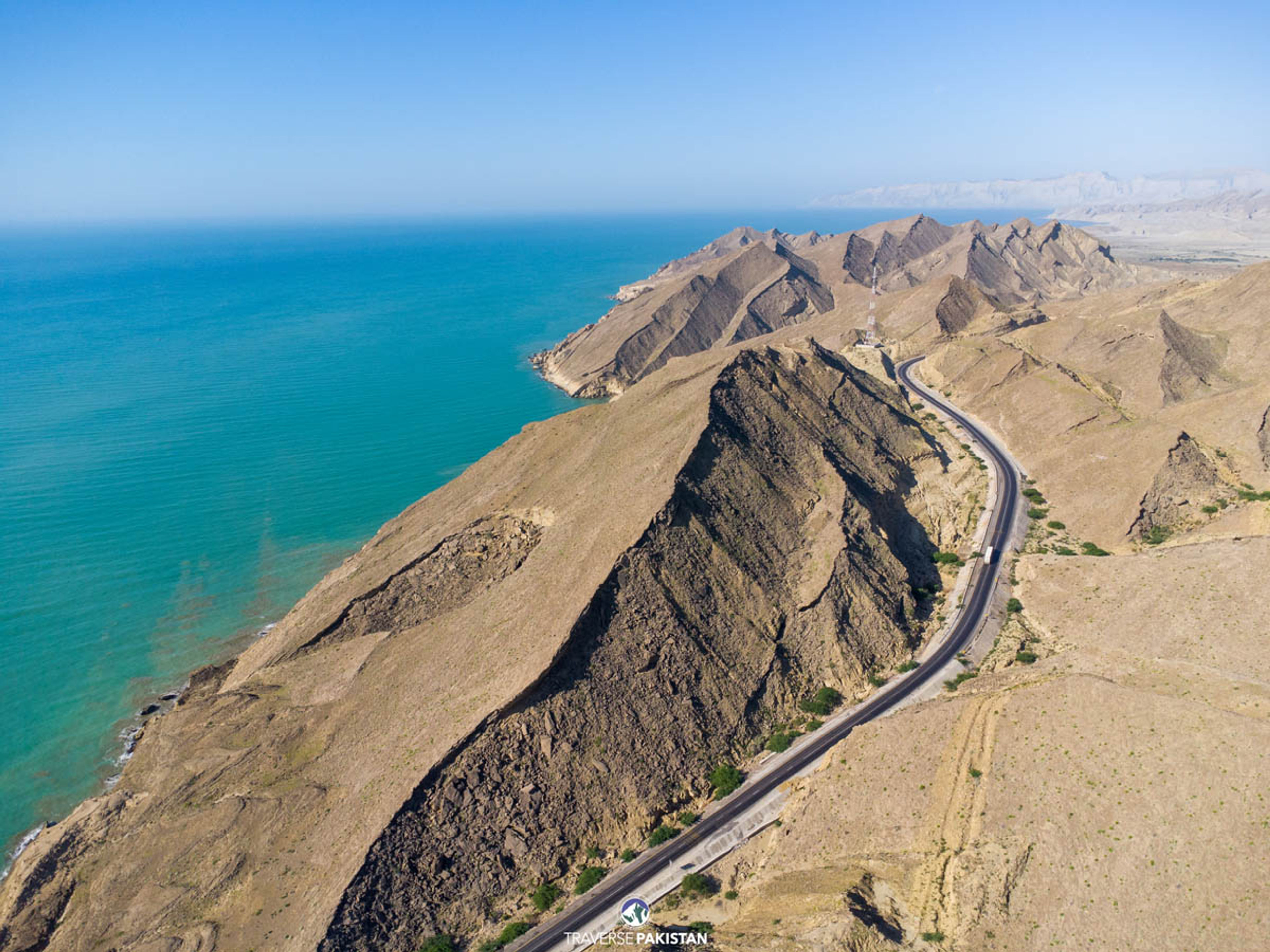
History of Makran goes back to time of Alexander the Great. Known as Gedrosia in ancient times; through this very region Greeks invaded Arachosia, Alexandria and Bactria. Landscape is mostly Desert, Rivers fed by Monsoon Rains and coastal line stretching for about 600 kms. Word Makran originated from Persian Mahi Khoran meaning “fish eaters”. This whole region is rich in wild life, pristine beaches and boundless horizons of wilderness makes Makran one of the unique coastal experiences in the world. Coastline starts from Kund Malir crossing over from majestic Hingol to Ormara, blends into Mars like landscape of Pasni which after spreading for miles to Gwadar and Pishukan gradually vanishes at Jiwani - the last beach before Iran. In ancient times Makran was always known as Kech - Makran, till date many folklores of Sindhi and Balochi mentions the civilisation of Kech at the tip of Kech River near present day town of Turbat, which used to be a kingdom ruling over the wilderness of Makran coast since 5th century BC.
12 spots to explore

Connects Hingol to Makran

Truly Golden

Eve's Bay

A Mystery

Deepest Sea Port

Crown of Makran

Into the Horizon

Tip of Makran Coast

Emerald Blues

Small but Ancient

Hidden but Evident

Timeless & Tall
3 flexible packages — your dates, your tier
The small, specific reasons travellers keep coming back.
A pristine golden beach with dramatic cliff backdrops.
Hingol National Park's surreal mud volcanoes.
A natural rock formation resembling a woman looking skyward.
The strategic port city at the tip of Pakistan's coastline.
Camp under the stars on pristine, empty beaches.
Dolphins, sea turtles, and diverse marine ecosystem.
Getting there, what to do, where to stay, and what to eat — the local ground truth.
Makran is reached by road from Karachi via the Makran Coastal Highway (N-10), a fully-sealed 650 km road that runs the length of the Balochistan coast. Kund Malir and Hingol National Park are 4 hours west of Karachi, Ormara is another 3 hours, and Gwadar is 8 to 9 hours from Karachi total. From Islamabad or Lahore, most travellers fly to Karachi first, direct flights to Gwadar (GWD) from Karachi and Islamabad also exist via PIA.
Gwadar International Airport (GWD) is served by PIA from Karachi (60 minutes) and from Islamabad via Karachi. The new airport built with Chinese support in 2024 has expanded capacity, but scheduling is limited compared to Skardu or Gilgit. Flying in cuts a day off the itinerary.
Kund Malir is a wide, empty beach 4 hours west of Karachi, the eastern anchor of the Makran coast. It sits inside Hingol National Park, Pakistan's largest national park, protecting the Princess of Hope rock formation, the Balochistan Sphinx, and the mud volcanoes of Chandragup, one of the world's highest active mud-volcano fields. Full day out from Karachi, or an overnight in Kund Malir before continuing west.
Ormara is a naval-town-turned-beach-destination halfway between Kund Malir and Gwadar. Its haft-talar cliffs (seven rocks) and pristine Pearl Beach are the reason to come. Two hotels have opened here in the last five years, and it is the natural overnight halfway stop on a Karachi-to-Gwadar road trip.
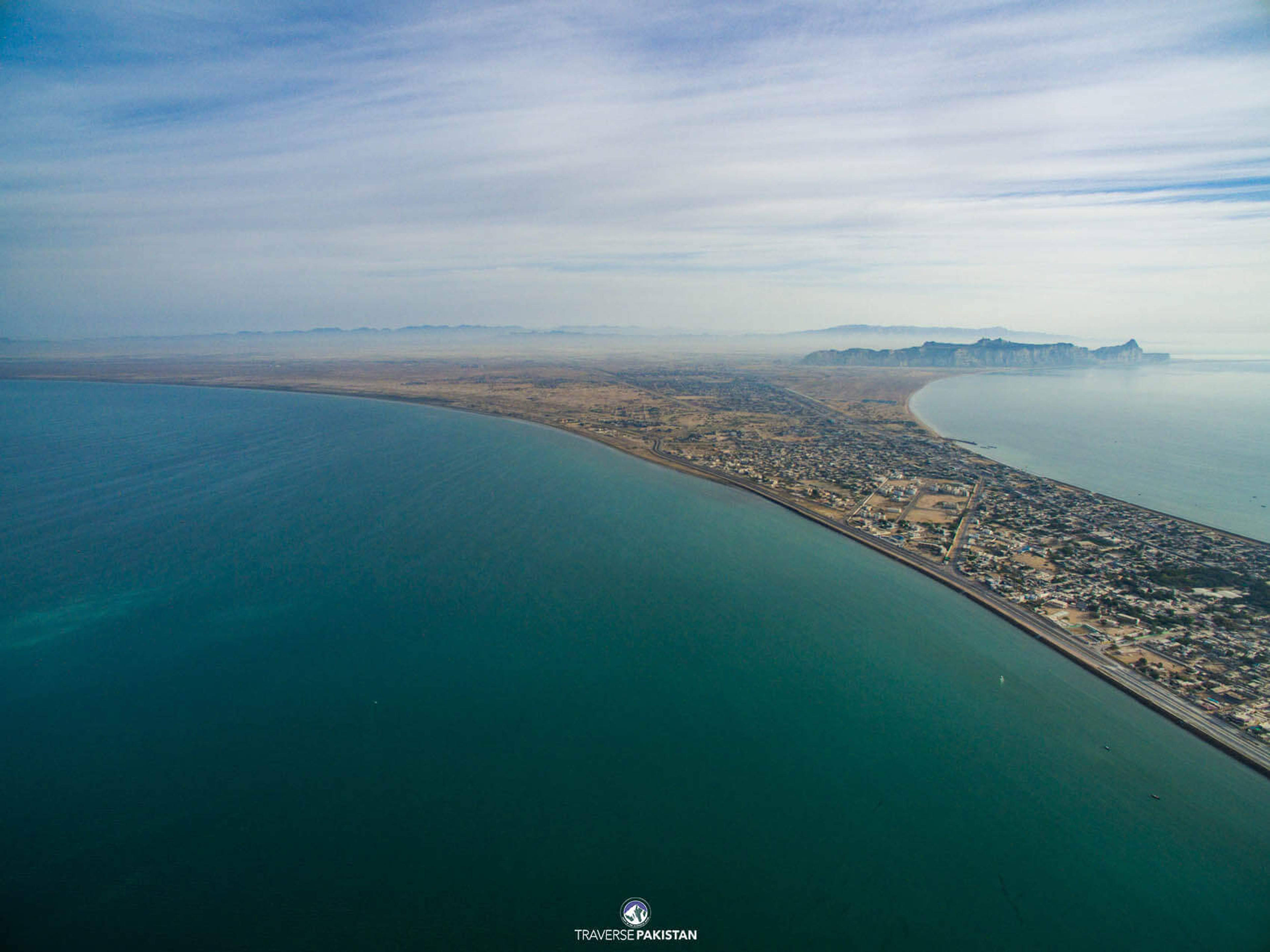
Gwadar's natural hammerhead-shaped peninsula gives it two beaches on either side, East Bay and West Bay, and one of the most dramatic coastal skylines in Pakistan. Marine Drive along the southern coast, the Gwadar port viewpoint, and the fish market at dawn are the must-do stops. Two full days in Gwadar cover the essentials.
Jiwani, 60 km west of Gwadar, is the last Pakistani town before the Iranian border, home to a colonial-era Second World War RAF airfield and the memorial to the crash of Zeenat Almas Jiwani. A day trip from Gwadar for those who want to see the westernmost tip of the country.
Pearl Continental Gwadar is the flagship luxury property, a hilltop hotel with sweeping East Bay views, a pool and reliable dining. Sadaf Resort Gwadar is the strong deluxe option, contemporary rooms and a good location for the beaches.
Gidan Beach Resort is the luxury pick in Ormara, boutique-scale rooms directly on Pearl Beach with in-house dining and a beach-side lounge. Haft Talar Resort is the reliable deluxe option, further from the sand but well-run and clean.
Foreign nationals need a No Objection Certificate arranged in advance through your operator to travel the Makran Coastal Highway, plan for a week's notice. Pakistani nationals need a CNIC at multiple military checkpoints along the road. Best season is November to February when the coast is 20 to 28°C by day and the dry Balochistan winter light is spectacular. Summer (April to September) is hot, humid and best avoided. Phone signal is patchy above Ormara and there are ATMs in Gwadar only.
Makran is Balochi-speaking country, with a strong Persian and Arabic cultural influence carried by centuries of sea trade with Oman and Iran. The name Makran itself comes from the Persian Mahi Khoran, fish-eaters, and seafood is the centre of the local cuisine, from sajji (slow-roasted fish or lamb) to fresh grouper and pomfret grilled at the beach. Balochi hospitality, the melmasti tradition, is unusually warm even by Pakistani standards. Culturally the coast layers the ancient Gedrosia of Alexander's ill-fated 325 BC march, the Kech-Makran kingdom of the 5th century BC, and the modern China-Pakistan Economic Corridor projects around Gwadar into a single wide sweep.
March – April
Best timeWarm 22–30°C coast days — clear water and the last calm weeks before summer heat.
May – August
Poor time35–40°C heat with high humidity across the coast — most operators pause the Makran drive.
September – October
ShoulderHeat eases through the month — sea calms, the coastal highway becomes bearable again.
November – February
Best timePeak season across the Makran Coast — clear days, calm sea, and full access to Hingol, Ormara, Gwadar.