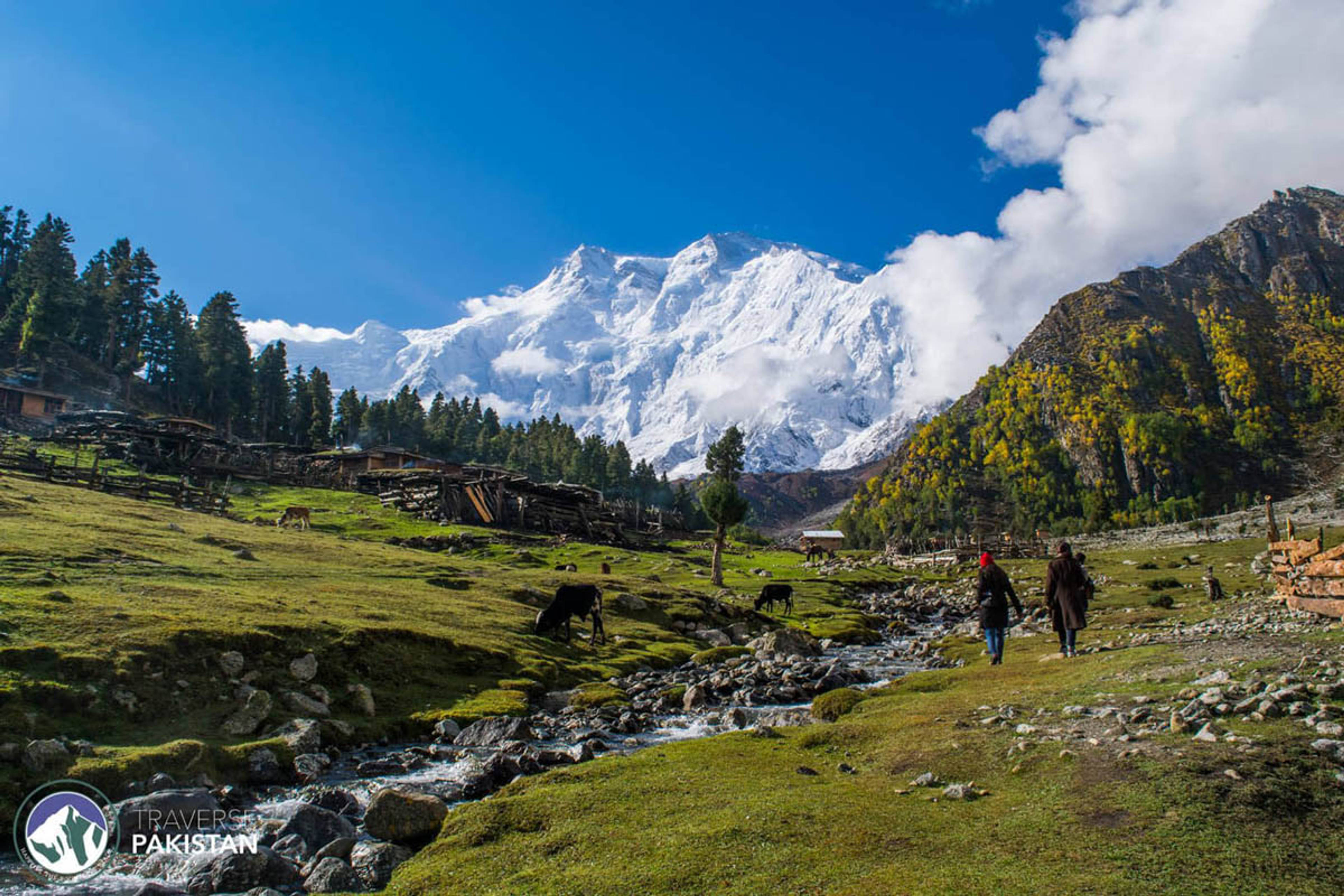
Nestled at the confluence of three of the world's mightiest mountain ranges, the Karakoram, the Himalayas, and the Hindu Kush, Gilgit has served as a crossroads of civilizations for over two millennia. Ancient Silk Road caravans once passed through its valleys, carrying silk, spices, and ideas between China, Central Asia, and the Indian subcontinent. Buddhist pilgrims, traders, and conquerors all left their mark here, traces of which can still be found etched into the region's rock faces in the form of ancient petroglyphs and inscriptions dating back thousands of years.
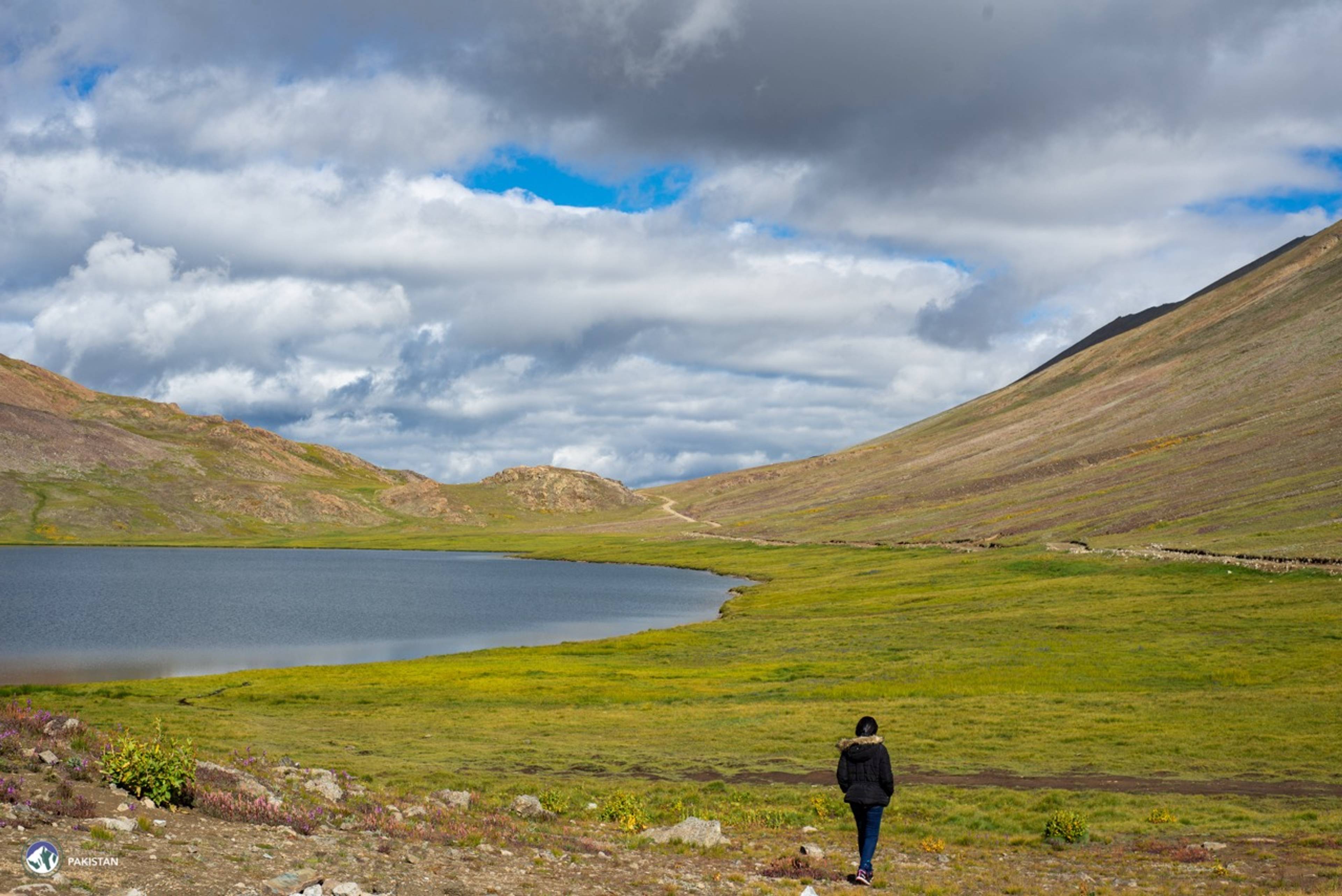
Today, Gilgit stands as the beating heart of Gilgit-Baltistan, a modern tourism hub from which the most spectacular destinations in northern Pakistan radiate outward like spokes of a wheel. To the north, the legendary Hunza Valley beckons with its terraced apricot orchards, turquoise lakes, and the commanding silhouette of Rakaposhi. To the east, the road winds toward Skardu, the base camp for K2 and the great peaks of the Karakoram, where glaciers stretch to the horizon and silence has a sound of its own. And to the west, the road less travelled leads through the pristine Ghizer Valley and over the storied Shandur Pass, the "Roof of the World", where an annual polo tournament has been played at 3,700 metres for generations, before descending into the ancient and culturally rich valleys of Chitral.
Gilgit is not merely a stopover. It is a living junction of history, culture, and adventure, where every road leads to wonder.
Getting there, what to do, where to stay, and what to eat — the local ground truth.
How to get to Gilgit
By air
Gilgit International Airport (GIL) is served by daily PIA flights from Islamabad, a 60-minute leg over the western Karakoram and one of the most scenic flights in the country. There are currently no scheduled flights from Lahore or Karachi to Gilgit, most travellers connect via Islamabad. As with Skardu, Gilgit flights are highly weather-dependent and cancellations are common in winter and cloudy summer mornings. Plan a buffer day if you fly in.
By road via Naran and Babusar
The classic summer road route is Islamabad or Lahore to Naran, then over Babusar Top (4,173 m) to Chilas, joining the Karakoram Highway and continuing north to Gilgit. Total drive is 16 to 18 hours split with a night in Naran. Babusar is open roughly late May to early October.
By road via KKH year-round
The all-season option follows the Karakoram Highway via Mansehra, Besham, Dasu and Chilas to Gilgit, 20 to 22 hours split across two days. This is the go-to route in winter when Babusar is closed.
Things to do in Gilgit
Kargah Buddha
A 7th-century standing Buddha carved into a cliff at Kargah Nallah, 10 km outside Gilgit town, is one of the last visible remnants of the Silk Road Buddhist period in the region. Short drive, 30-minute stop.
Gilgit bazaar and Chinar Bagh
The main Gilgit bazaar is where travellers stock up on dried fruit, apricot oil, Chinese trade goods and pakol caps. Chinar Bagh, the riverside park, is the local evening walk with views over the Gilgit River and the Karakoram foothills.
Day trips to Naltar and Rakaposhi viewpoint
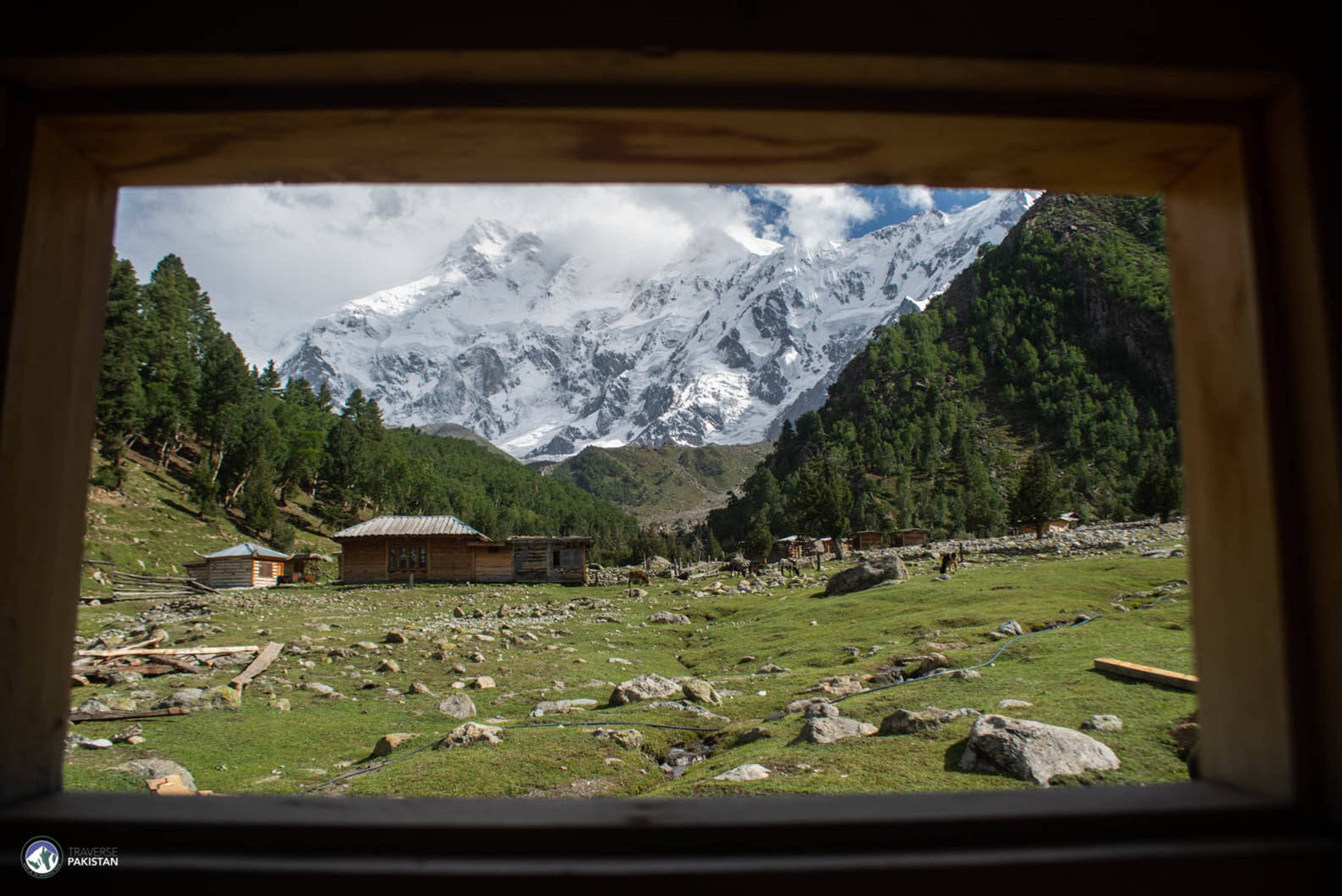
Naltar Valley is 2 hours by jeep from Gilgit, a green alpine anomaly with three coloured lakes and a working ski slope in winter. Rakaposhi viewpoint on the KKH, an hour toward Hunza, gives the best roadside view of the 7,788 m peak. Both are half-day trips from a Gilgit base.
Where to stay
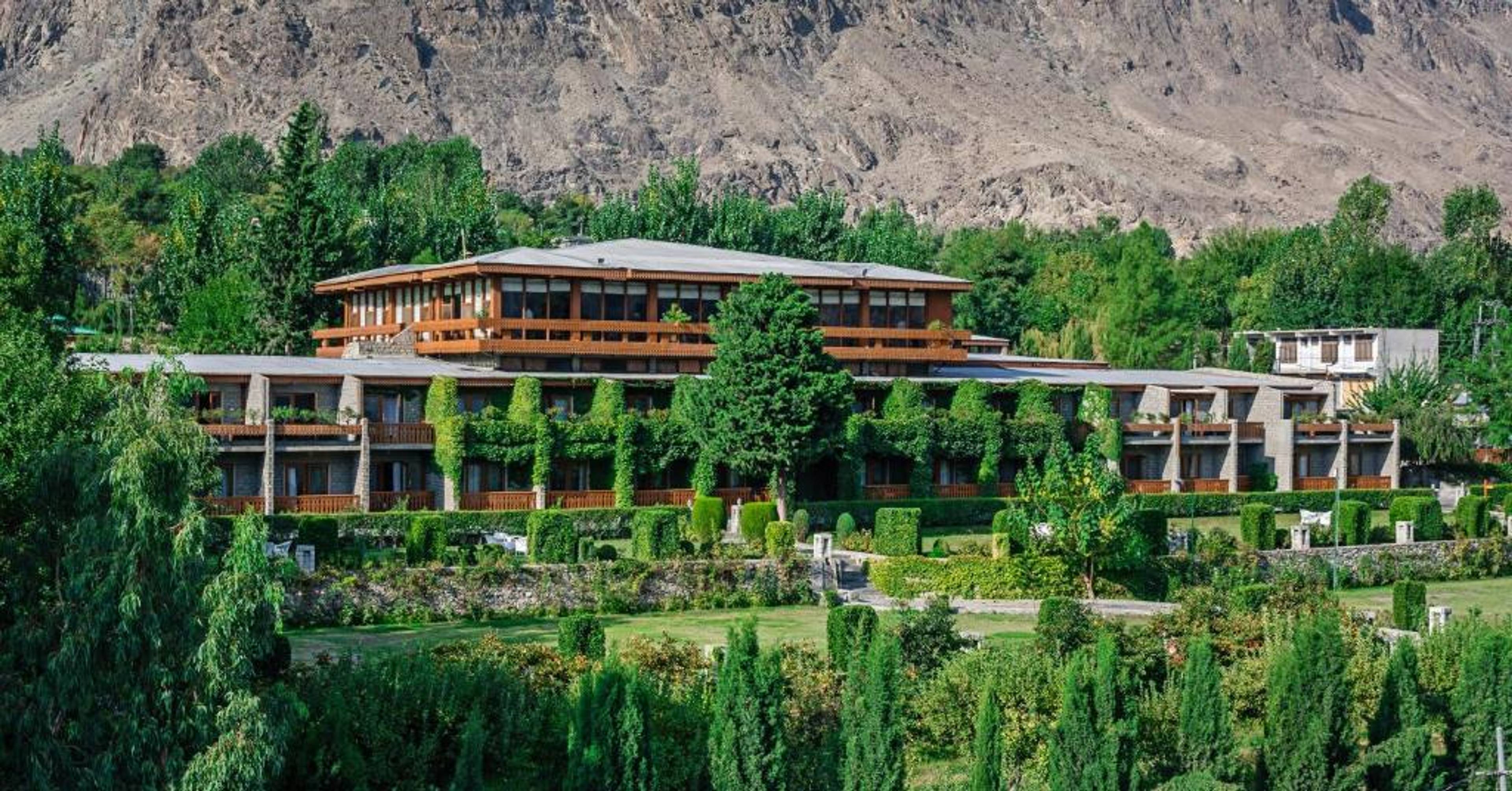
Gilgit Serena Hotel is the luxury standard, colonial-era property with gardens, mountain views and the region's most reliable restaurant. Destination Hotel Gilgit is the strong deluxe option, modern rooms in town centre with reliable heating in winter.
Food and culture
Gilgit is Shina-speaking Dardic country at the confluence of the Karakoram, Himalayas and Hindukush, historically a Silk Road caravan town. Ancient petroglyphs at Chilas and Thalpan (an hour downriver) record two millennia of pilgrims, traders and conquerors passing through. Local food is meat-forward with chapshuro (meat-filled bread), yak and lamb dishes, and apricot-and-walnut breakfasts. Culturally Gilgit is a hub, not a destination in itself, most travellers use it as a launchpad for Hunza, Skardu, Naltar or Chitral rather than a stay-put base.
Four chapters
Best Time to Visit
spring
Mid-March – Mid-April
Best time
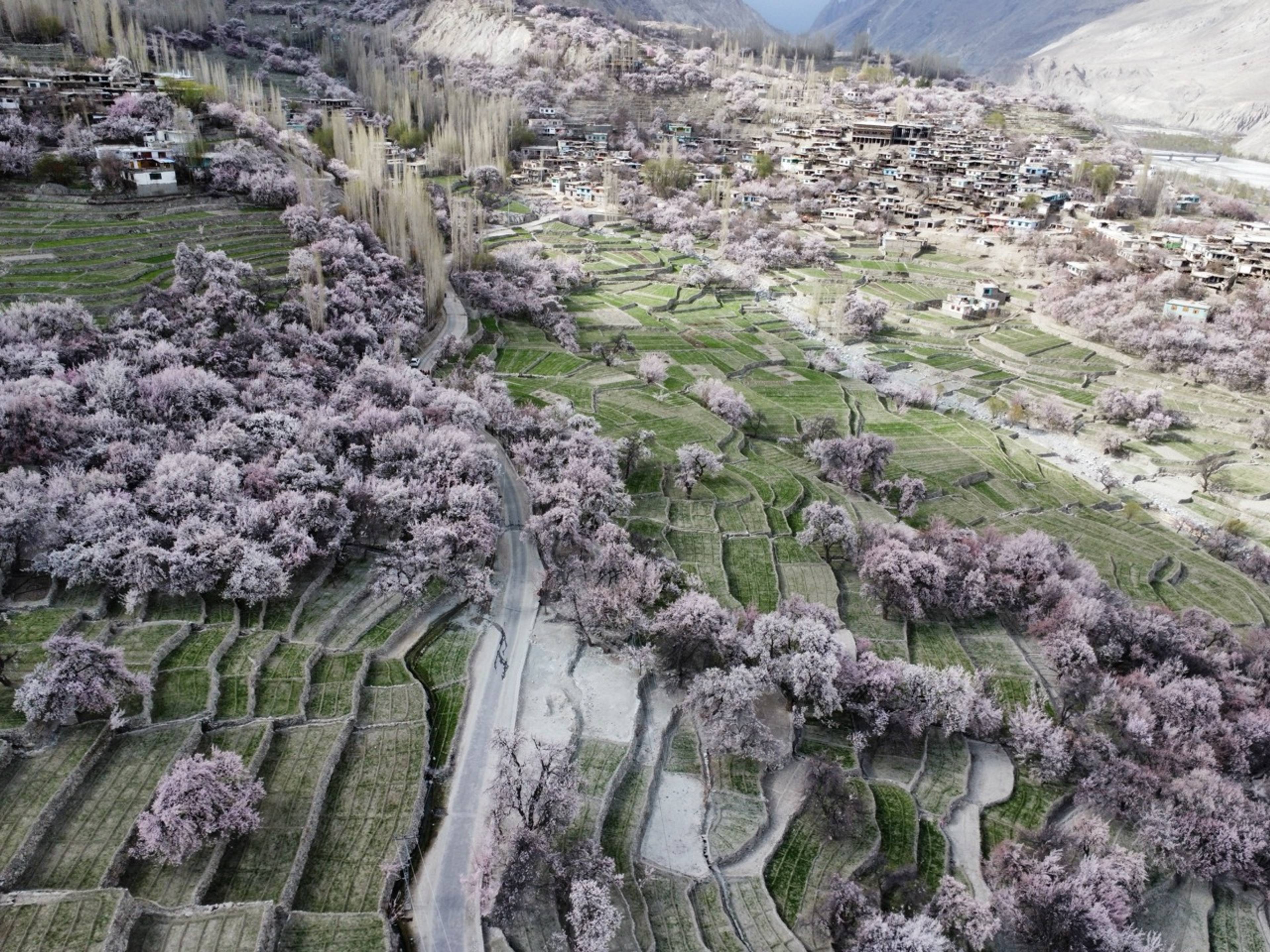
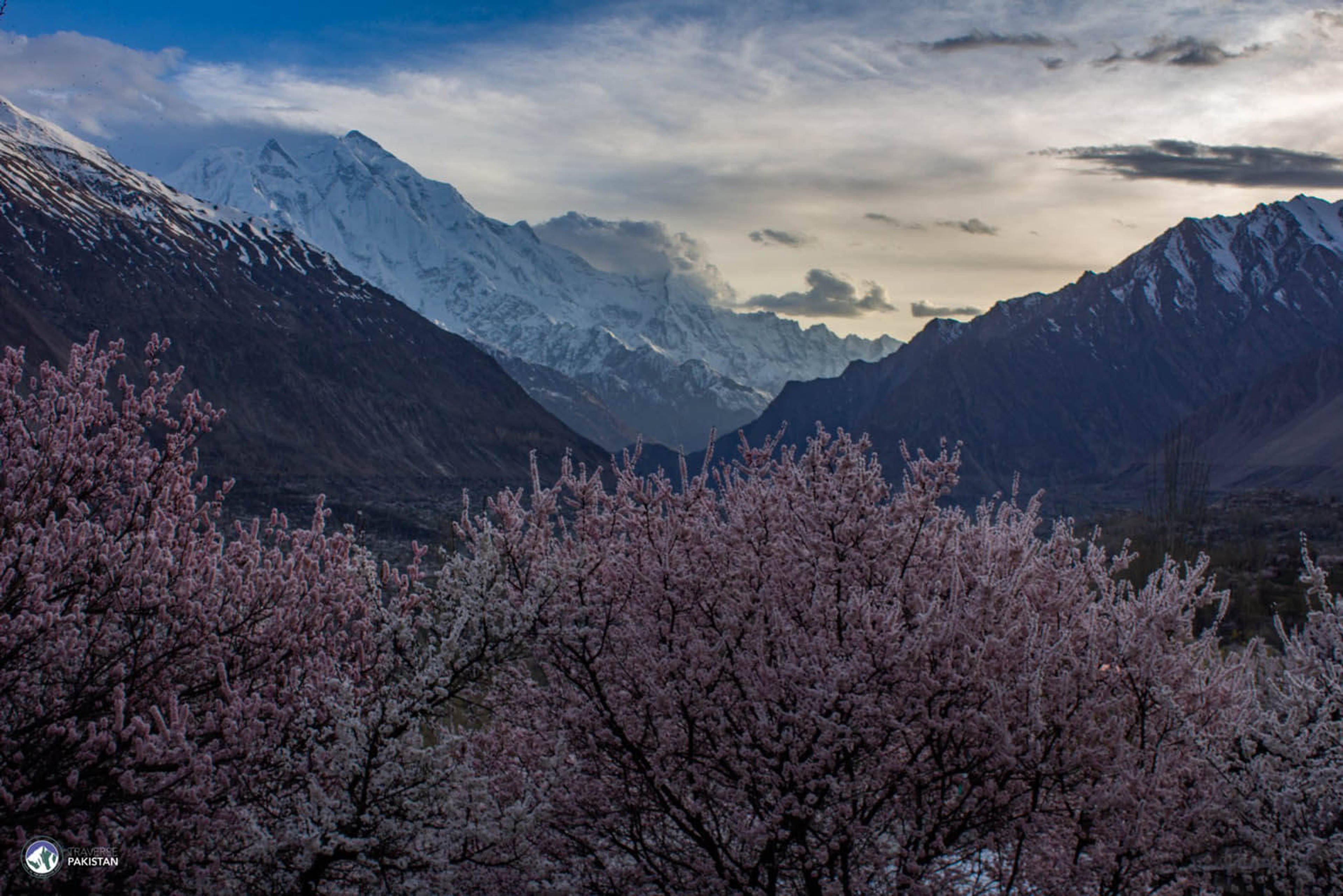
Apricot and cherry blossoms across the Karakoram Highway approach — the town's most photographed weeks.
summer
Mid-April – Mid-October
Best time
Long light and warm 18–28°C days — clear peak views and full access to Hunza, Nagar, Naltar and Ghizer.
autumn
Mid-October – Mid-November
Best time
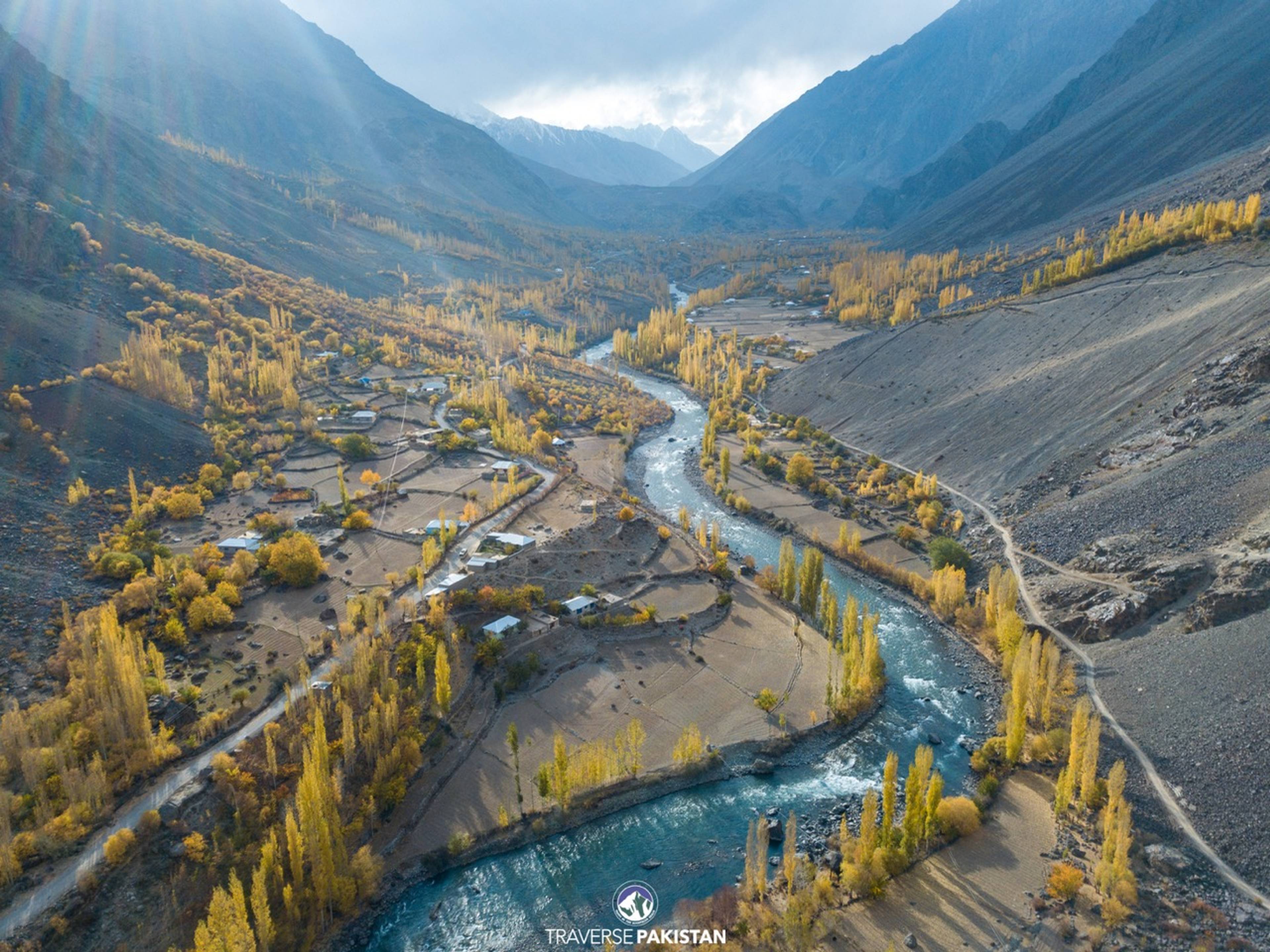
Poplars, apricot and cherry trees turn yellow, orange and merlot red — dry, still air and sharp peak lines.
winter
Mid-November – Mid-March
Shoulder
KKH stays open — town snow-blanketed, quieter bazaars, warm homestays, and cleared access to Hunza and Nagar.