

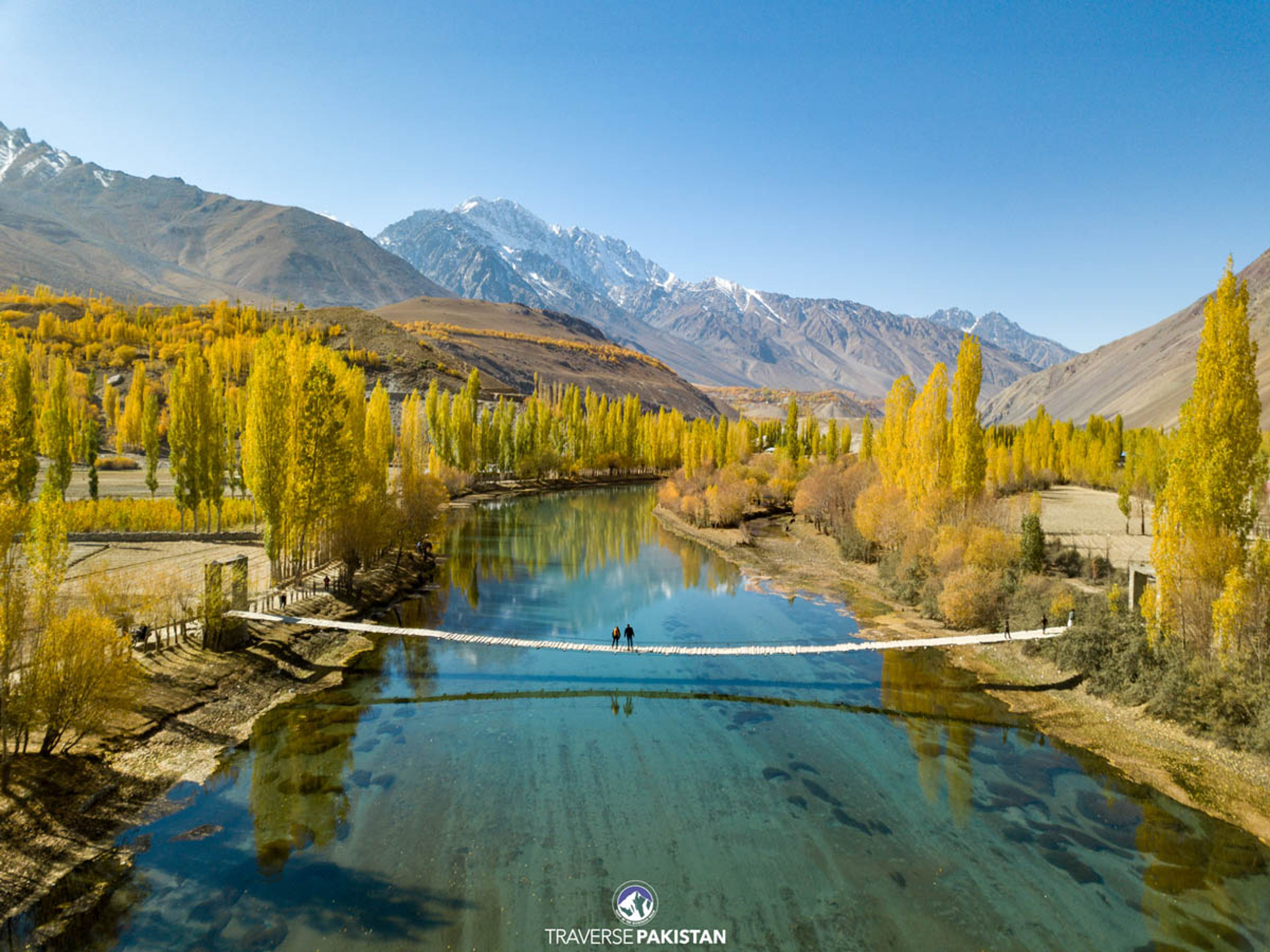
Phandar Lake
A turquoise jewel surrounded by mountains — Pakistan's most beautiful lake.
Land of the Lakes
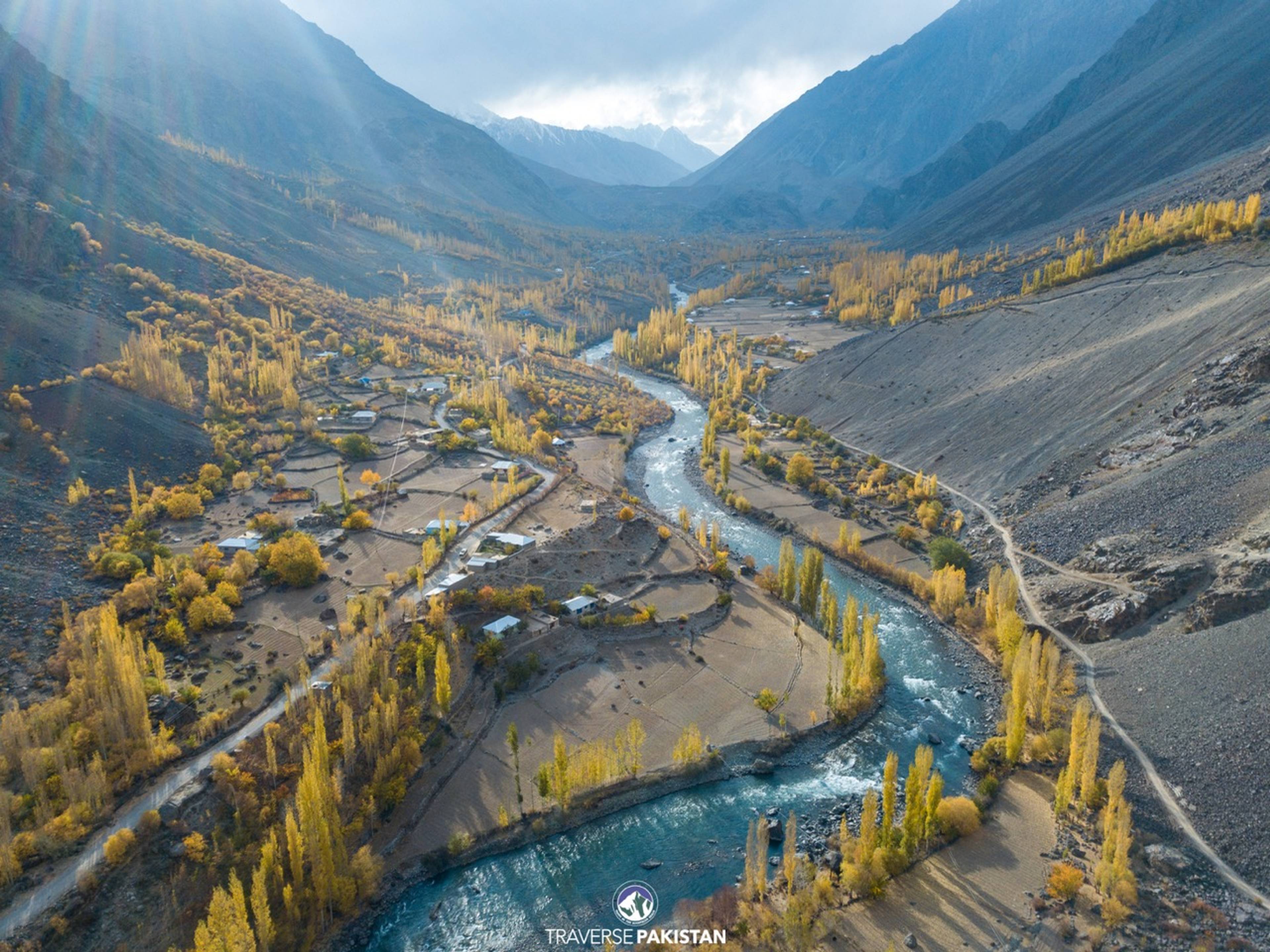
Being on the crossroads of Kashmir and Central Asia, the wide valley was inhabited due to its rich fertile land. Ghizer is known for its translucent streams and alpine lakes teeming with trout fish. Ishkoman & Yasin are sub valleys into Ghizer which lead to Central Asia via Wakhan Corridor. Phandar & Shandoor are one of the most famous destinations. In Spring one can find the most lush Gardens blooming with cherry, apricot and mulberry trees. In autumn, turquoise streams flowing along side crimson, yellow and golden trees present an illusion thats as unreal as it gets. Khowar and Shina are the main languages but Brushuski is also spoken in some parts. The mountain here are lower and the passes are greener and gentler than in the high Karakorams around Hunza and Skardu.
11 spots to explore

Capital of the Ghizer District

By the Interviewing Streams

Just Beautiful

Wide valley View.

Division of Karakoram & Hindu Raj

The wide Riverbed

True beauty of Shandoor

Epitome of Ghizer's Beauty

A swimming Loch

Hamlet of Gardens

Corridor to Wakhan
4 flexible packages — your dates, your tier
The small, specific reasons travellers keep coming back.
A turquoise jewel surrounded by mountains — Pakistan's most beautiful lake.
The world's highest polo ground, home to the annual Shandur Festival.
A mystical valley with ancient forts and traditional culture.
A serene alpine lake perfect for camping and photography.
Far less touristic than Hunza or Skardu — an authentic experience.
Spring blossoms frame turquoise waters for perfect photography.
Getting there, what to do, where to stay, and what to eat — the local ground truth.
Ghizer is reached only via Gilgit. From Gilgit, the Ghizer Road heads west along the Ghizer River through Gakuch (the district headquarters, 2 hours) to Gupis (3.5 hours), Phandar (5 hours) and finally over Shandur Pass (3,700 m) into Chitral (10 to 12 hours from Gilgit). The road is open year-round to Phandar, though winter driving beyond Gakuch needs care after fresh snowfall. Shandur Pass itself is closed by heavy snow from November to April.
The fastest access is the daily PIA flight to Gilgit (GIL) from Islamabad, 60 minutes, and then the same drive west into Ghizer. Flights are weather-dependent, plan a buffer day.
Phandar at 2,800 m is the most photographed spot in Ghizer, a wide green valley opening around Phandar Lake, a turquoise river-fed lake teeming with trout and ringed by poplars that turn gold in October. Two to three days is enough for the lake, the river-side walks and a day trip up to Handrap. Best from late April to mid-October.
Shandur Pass at 3,700 m is famously the highest polo ground in the world and hosts the Shandur Polo Festival in the first week of July, a three-day open-air tournament between the Gilgit and Chitral teams that has been played on this plateau for over a century. Even outside festival week, Shandur is a wide alpine tableland worth an overnight camp. Access from Langar (Ghizer side) or Sor Laspur (Chitral side), open roughly late June to early October.
Yasin, a side valley off the Ghizer Road at Gupis, leads into a wide Wakhi-and-Burushaski cultural zone and eventually to the historical crossing into the Wakhan Corridor. The Fort Hotel Yasin and Rustagaarii Retreat are two established properties for a night here. Yasin is quieter than Phandar and rewards a slower pace.
Ishkoman, a side valley off the Ghizer Road, is the base for the multi-day Karambar Lake trek, an ambitious high-altitude route to one of the highest freshwater lakes in the world (4,272 m). 5 to 7 days on the trail with a guide, best from July to mid-September.
Along the main road, Gakuch is the district capital and useful lunch stop, Khalti Lake near Gupis is a wide river-lake photogenic from the road, and Gupis itself has the Arcadian Gupis luxury property for an overnight break on the drive to Phandar.
The Rover by Roomy is the luxury pick in Phandar, contemporary river-facing rooms with reliable heating in shoulder season.
Arcadian Gupis is the luxury option in Gupis, a wide-view riverside resort useful as a halfway overnight to Phandar or Yasin. In Yasin, Rustagaarii Retreat is the top luxury choice, and Fort Hotel Yasin is the reliable deluxe alternative in the village.
Spring (April to early June) brings cherry, apricot and mulberry blossom across the villages of Phandar and Gupis. Summer (June to September) is the trekking and Shandur window. Autumn (late September to mid-October) turns the poplars and orchards gold, arguably the single most photogenic week in the entire region. Winter is quiet, cold and only viable to Gakuch and lower villages, most upper Ghizer is snowbound.
Ghizer is culturally the most mixed of the northern districts, with Khowar (the Chitral language) spoken in the upper valleys, Shina in the middle, Burushaski in Yasin and pockets of Wakhi in Ishkoman. Historically it was the natural western extension of the Silk Road spur, connecting Gilgit through Yasin to the Wakhan Corridor and Central Asia. The classic dish is roasted trout from the Ghizer and Phandar rivers, and the takeaway is dried apricots, mulberries and walnuts from the valley orchards. The mountains here are lower and the passes gentler than in the high Karakoram to the east, giving Ghizer a softer, greener character that appeals to travellers who want the north without the extreme elevation.
Mid-March – Mid-April
Best timeApricot and cherry blossoms carpet the orchards along the Ghizer River — the valley's most photographed weeks.
Mid-April – Mid-October
Best timeLong light and warm 18–28°C days — clear peak views and full access to Phandar, Khalti and Handrap side-valleys.
Mid-October – Mid-November
Best timePoplars, apricot and cherry trees turn yellow, orange and merlot red — dry, still air and sharp peak lines.
Mid-November – Mid-March
ShoulderGilgit–Gupis road stays open — valley snow-blanketed, warm homestays, some upper side-valleys closed.