


Karakoram Highway
The most photographed stretch of the KKH runs through Gojal — Attabad, Passu, Batura and Khunjerab.
Land of the Wakhi
Gojal, or Upper Hunza, stretches from Attabad Lake north to the Khunjerab Pass on the Chinese border. It is the homeland of the Wakhi-speaking community and the most dramatic stretch of the Karakoram Highway — the road passes Passu Cathedral, the Hussaini suspension bridge, Borith Lake, Batura Glacier and finally Sost, Pakistan's last town. Politically part of Hunza, culturally and linguistically Gojal is distinct, with its own festivals, cuisine and a strong tradition of high-altitude mountaineering.
9 spots to explore
10 flexible packages — your dates, your tier
The small, specific reasons travellers keep coming back.
The most photographed stretch of the KKH runs through Gojal — Attabad, Passu, Batura and Khunjerab.
Distinct language, cuisine and festivals — the Wakhi community traces its roots to Pamir.
The southern gateway to Gojal — turquoise water formed by the 2010 landslide, with boating and lakeside stays.
The world's highest paved border crossing at 4,693 m — the northern end of Gojal and of Pakistan.
Getting there, what to do, where to stay, and what to eat — the local ground truth.
Gojal is Upper Hunza and is reached only via the Karakoram Highway through Karimabad. From Islamabad, drive north to Gilgit via KKH (18 to 20 hours, split with a night in Naran or Chilas), then continue 3 hours on the KKH through Hunza. From Karimabad, Gojal begins just past Attabad Lake, and the road continues north to the Chinese border at Khunjerab, 5 to 6 hours further. The route is open year-round to Sost, but Khunjerab Pass itself is closed from December to March.
For the fastest access, fly to Gilgit (GIL) on the daily PIA flight from Islamabad and drive 3 hours on the KKH to Attabad. Skardu (KDU) also works with daily PIA, AirSial and AirBlue flights, though the drive from Skardu to Gojal is longer at 6 to 7 hours. Both airports are weather-dependent, plan a buffer day.
Attabad Lake, formed in 2010 when a landslide dammed the Hunza River, is now the most photographed spot in the Karakoram, an intensely turquoise 21 km lake framed by 6,000 m peaks. Boat rides, jet skis and cliff-side hotels line the shore. The KKH now runs through a series of Chinese-built tunnels around the lake, cutting the earlier bumpy detour.
The Passu Cones (Cathedrals) are the jagged 6,000 m peaks that dominate the KKH skyline north of Attabad, one of the country's most photographed mountain silhouettes. Passu Glacier, a 30-minute walk from the KKH, is the most accessible glacier snout in Pakistan, worth an hour's stop on the drive north.
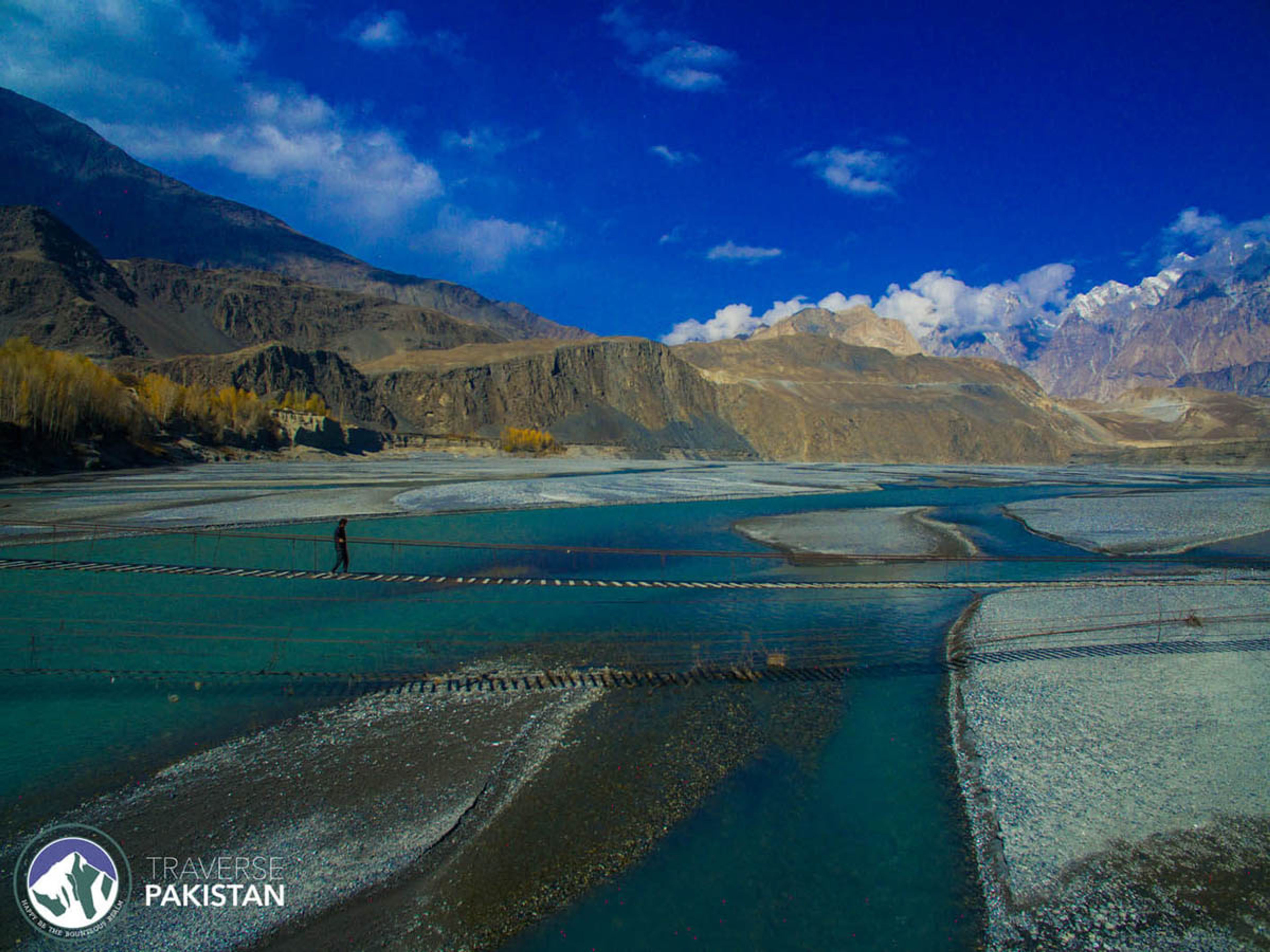
The Hussaini suspension bridge over the Hunza River is a 200 m plank-and-cable walkway with gaps you can see the river through, regularly rated one of the world's most dangerous bridges. In reality it is safe but photogenic. Cross it, walk the far bank for 30 minutes, and return the same way. Located just past Passu village on the KKH.
Borith Lake sits above Hussaini, a wide alkaline lake at 2,600 m that is a stopover for migratory birds and the best base for a walk to the Passu Glacier from the north side. A small guesthouse cluster and a couple of tea stalls make it a good half-day.
Khunjerab at 4,693 m is the highest paved international border crossing in the world, marking the frontier between Pakistan and China. The pass is open from April to November, closed December to March. A day trip from Sost or from a Hunza base, plan an early start for the 6-hour return drive. Foreign nationals need a permit checked at the Sost checkpoint.
Sost is Pakistan's northernmost town and the customs post for cross-border traffic to China. A dusty single street of hotels, customs offices and dry-fruit shops. Beyond Sost, the Batura Glacier stretches 56 km, one of the world's longest outside the poles, and a strenuous multi-day trek base for the Batura Wall traverse.
Sost Serena is the only luxury property in northern Gojal, a modern lodge on the way to Khunjerab with reliable heating in the shoulder season. Around Attabad Lake, several cliff-side and lakefront hotels compete for the view, all worth booking through an operator to filter for actual room standards. Passu village has simple family-run inns for a night on the way to Khunjerab.
Gojal is Wakhi-speaking country, distinct from the Burushaski-speaking Hunza to the south. The Wakhi are a Pamiri people whose ancestral homeland stretches into Tajikistan, Afghanistan and China's Xinjiang, and their language, dress, songs and food carry that Central Asian identity. The signature dishes are chapshuro (meat-filled flatbread), gyal (yak or lamb noodle soup), and sun-dried apricots and mulberries. Wakhi music, driven by the sitar-and-daf, is closer to Central Asian than South Asian tradition. Culturally Gojal is one of the most literate districts in Pakistan, a legacy of Aga Khan Development Network schools that have run here for 50 years.
Mid-March – Mid-April
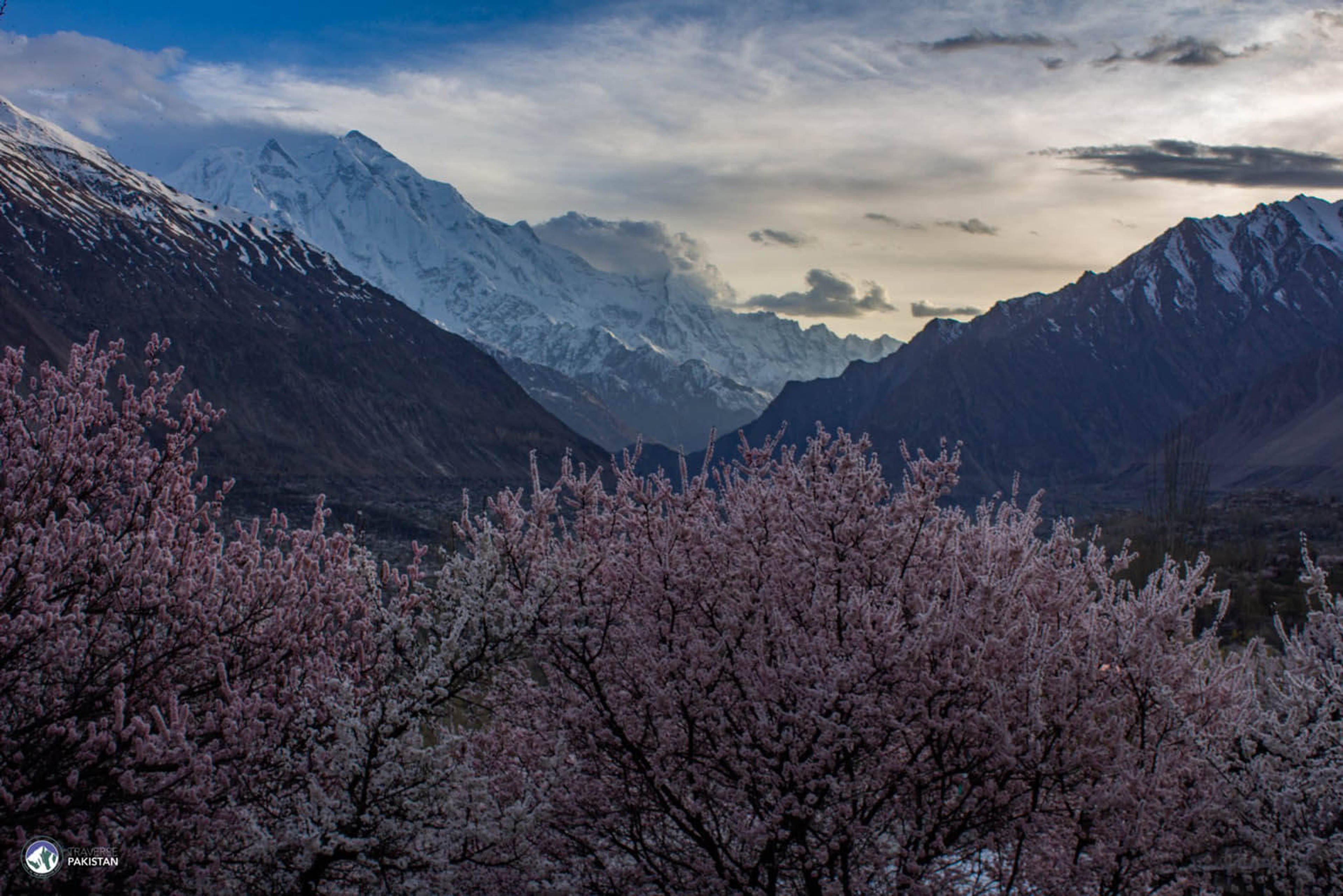
Best timeApricot and cherry blossoms fill the Upper Hunza villages as the KKH clears and snow retreats.
Mid-April – Mid-October
Best timeLong light, warm days, and all Wakhi villages fully operating — the widest visiting window.
Mid-October – Mid-November
Best timePoplars, apricot and cherry trees turn yellow, orange and merlot red from Attabad to Khunjerab — arguably the best three weeks of the year.
Mid-November – Mid-March
ShoulderKKH from Attabad to Sost stays open; Khunjerab Pass closes for the season; villages reachable but quieter.